
New technologies have become integral to the lives of children and young people in today’s society, both within schools and in their lives outside of school.
The internet and other digital information and communications technologies are powerful tools, which open up new opportunities for everyone. These technologies can stimulate discussion, promote creativity and awareness of context to promote effective learning. Young people should have the entitlement to stay safe at all times.
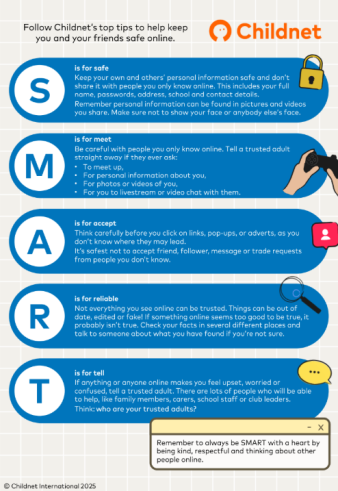
At Coomb Briggs, we encourage all the children to follow the SMART rules both in school and at home.
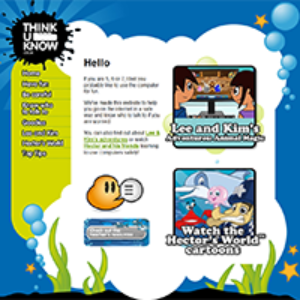
Think U Know for 5 to 7 year olds
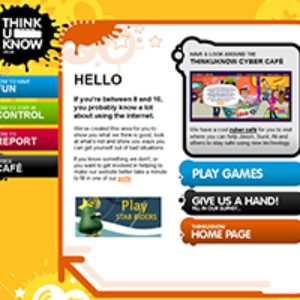
Think U Know for 8 to 10 year olds

Own It

Think U Know - Parents & Carers
Know IT All for Parents
Parents’ Guide to Technology
Online Safety advice and information for parents
Advice for Parents and Carers
Your support at home is crucial to keeping your child safe online. We encourage you to have regular, open conversations with your child about what they are doing online.
Top Tips for Parents:
- Talk Regularly: Ask your child about the apps, games, and websites they are using. Show an interest in their online world, just as you would their friends and hobbies.
- Set Up Parental Controls: Use the parental control and safety features available on your home broadband, mobile devices, and gaming consoles. These can help you filter content and manage screen time.
- Discuss Online Risks: Talk to your child about the risks of sharing personal information, speaking to strangers online, and the importance of thinking before they post.
- Know Who to Turn To: Make sure your child knows that if they see anything online that makes them feel worried, scared, or uncomfortable, they can talk to you or another trusted adult.
Reporting a Concern
If you have any concerns about your child’s online safety or the well-being of another student, please do not hesitate to contact your child’s academy directly. Our designated safeguarding leads are trained to handle these issues with sensitivity and confidence.
In an emergency, or if you believe a child is in immediate danger, please call the police on 999.
Useful E-Safety Resources
Here are some excellent resources for parents and students to learn more about staying safe online:
- NSPCC Net Aware: Provides a guide to the social networks, apps, and games your children use.
- UK Safer Internet Centre: Offers tips, advice, and resources to help children and young people stay safe online.
- Thinkuknow: The education programme from the National Crime Agency’s CEOP command, providing age-appropriate resources and advice.
- Childnet International: A non-profit organisation working to make the internet a great and safe place for children.
- Internet Matters: Provides age-specific online safety checklists, guides on how to set parental controls, and more.
Together, we can ensure that every student at Coomb Briggs Primary Academy has a safe and positive experience online.